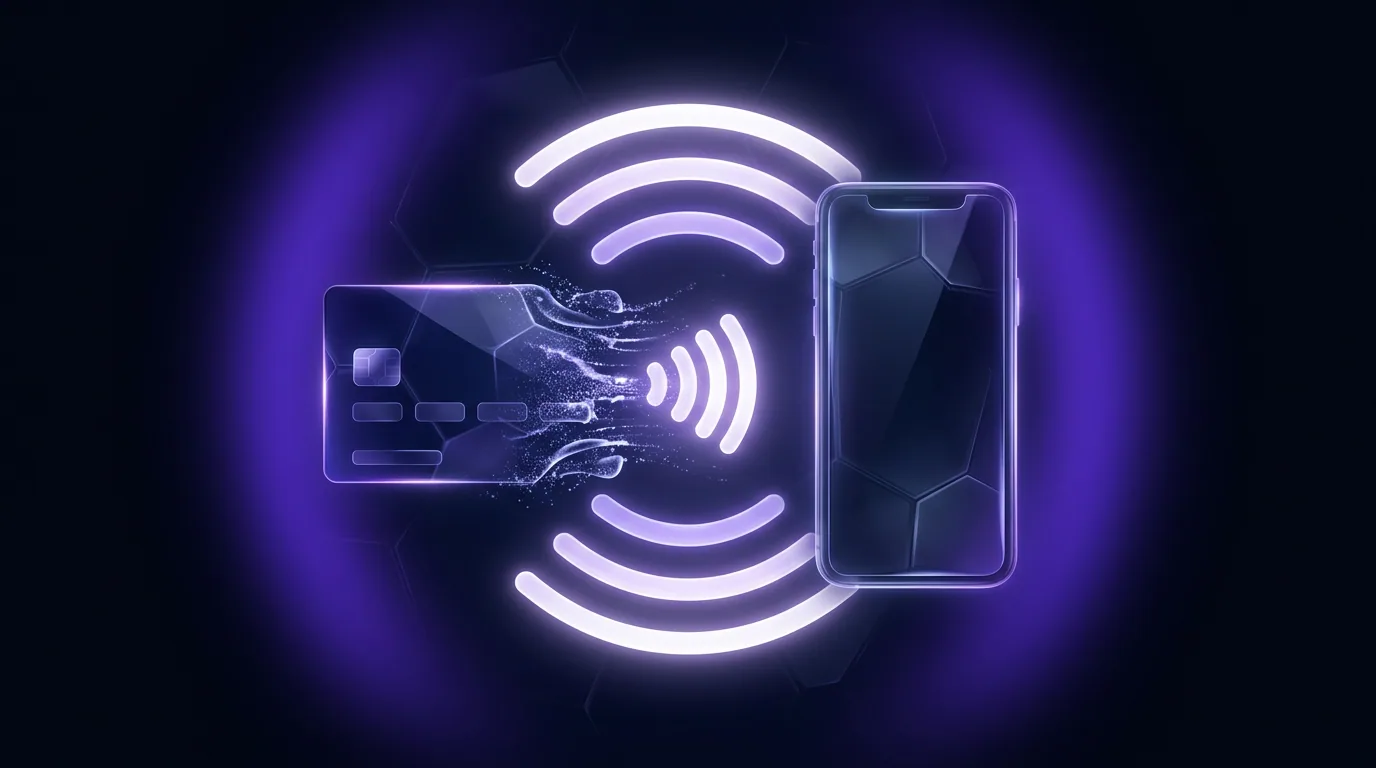
- For everyday contactless purchases, the phone is usually the easier option.
- For ATM cash and tills that insist on a physical card, you need the physical card.
- Both spend the same wallet balance, so the choice is about the situation, not the money.
- Because of the fixed 1 USDT per withdrawal, one larger ATM withdrawal costs less in fees than several small ones for the same total.
Is it more convenient to pay by phone or with a physical card?
For most everyday purchases, the phone is the simpler option. A virtual card added to Apple Pay or Google Pay pays by tapping the phone at a contactless terminal, and you rarely have to carry anything else. A virtual card is also issued right away, so you can start without waiting for delivery. The physical card wins in the situations described below, not in ordinary shopping.
When do you actually need a physical card?
There are two clear cases. The first is ATM cash: a phone-based virtual card is not the tool for withdrawing banknotes, while the physical card works at ATMs. The second is any place that requires a physical card at the till. The physical card is delivered by mail, so if you know you will need cash or such tills, order it in advance rather than at the last minute.
| Situation | Phone (virtual card) | Physical card |
|---|---|---|
| Tapping at a contactless terminal | Tap the phone with Apple Pay or Google Pay | Works at tills |
| Place that requires a physical card | May not be accepted | The right choice |
| ATM cash | Not the tool for it | Works at ATMs, 1.5% + 1 USDT per withdrawal plus any ATM-owner fee |
| Online purchases | The virtual card covers this | Not the main use |
| Getting it | Issued right away | Delivered by mail |
Do the phone and the card spend different money?
No. Both draw on the same wallet balance, so the question is about the situation, not about where your funds are. In Nexus Pay, the fee schedule applies to the card as a whole: 0% on purchases, 0.5% to move money from the wallet balance to the card, and 1.5% + 1 USDT per ATM withdrawal. An ATM owner may add its own fee, which is shown on the ATM screen before you confirm. For example, 1000 USDT moved to the card becomes $995.00, and withdrawing all of it at an ATM leaves $979.08 before any ATM-owner fee.
Why can paying by phone have a higher contactless limit?
When you pay by phone, you are authenticated on the device itself. Because of this, the practical contactless limit can be higher than with a plain card tap. The exact ceiling depends on the terminal and the payment setup, so this article does not name a figure. If you plan a larger purchase, the phone is worth trying first at a contactless terminal.
How do you get a virtual card and a physical card?
Nexus Pay offers a Signature virtual card (30 USDT to issue), a Business virtual card with higher limits (50 USDT), and a physical card (200 USDT including delivery). Issuing any of them requires identity verification, a document and a photo, under anti-money-laundering law, and the card is issued by a partner organisation. The virtual card works online and contactless via Apple Pay and Google Pay. The physical card arrives by mail and works at tills and ATMs.
Which is safer if something goes wrong?
The card only spends the available balance: there is no credit and no overdraft, so a mistake cannot push you into debt. If you lose your phone or card, or simply want a pause, you can freeze and unfreeze the card in the app in one tap. The app also has an optional four-digit access code. Keep in mind that blockchain transfers are irreversible, so double-check the address and network whenever you top up the wallet.